

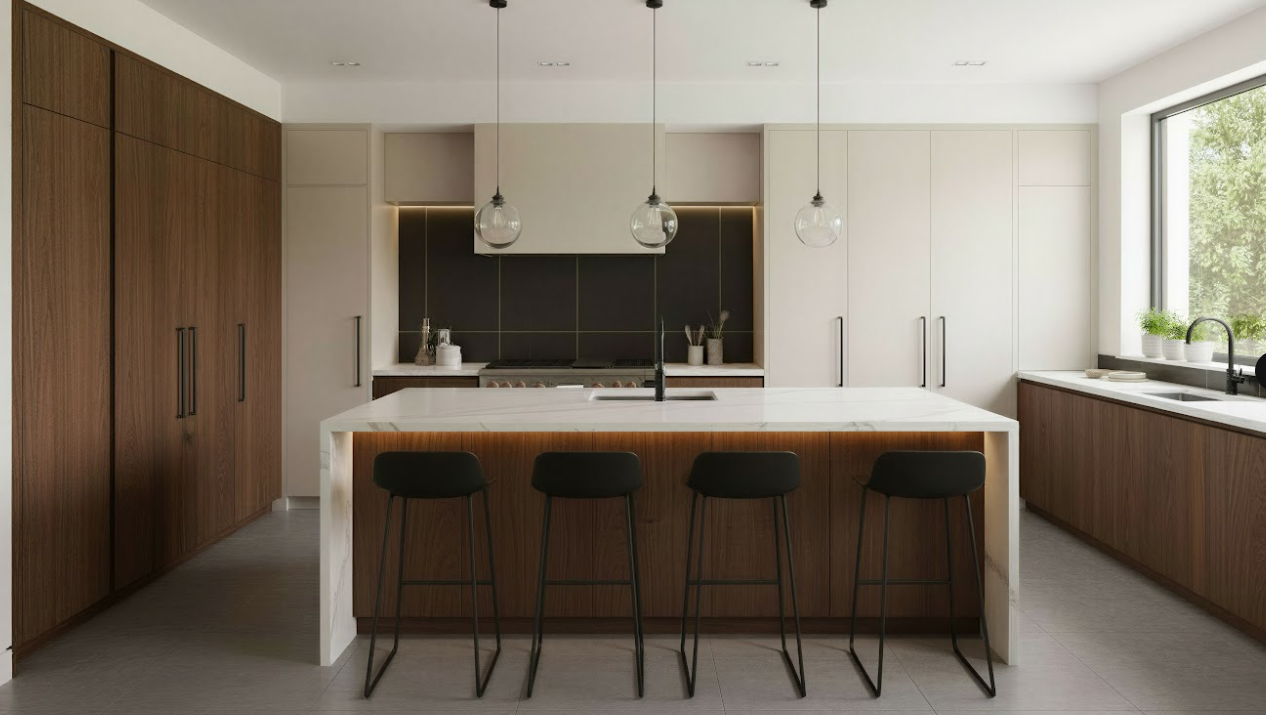
Why We Design Cabinet Interiors Before Exteriors
It All Begins Here
In luxury cabinetry, appearance is only the surface layer of a much deeper design process. Before finishes, door styles, or hardware are ever discussed, we begin with how the cabinetry will be used.
Drawer depths, storage zones, reach ranges, and daily workflows are resolved first. This approach ensures that cabinetry supports the way a space functions—not just how it looks in photographs.
When function is prioritized early, design decisions become clearer. A drawer that opens effortlessly, storage that feels intuitive, and layouts that anticipate daily routines all contribute to a sense of ease. This is where luxury becomes tangible.
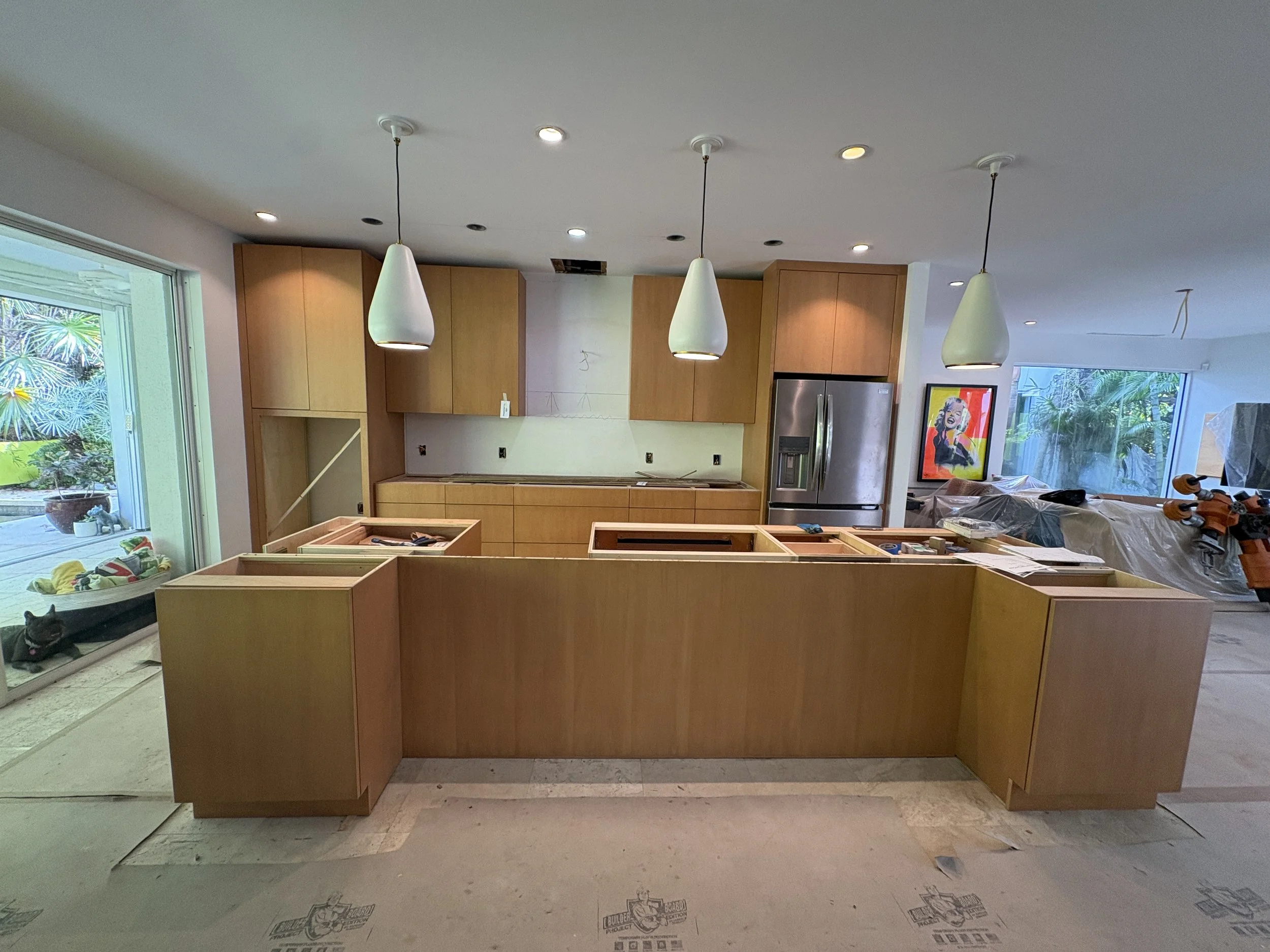
Luxury Cabinetry Is Defined by What You Choose Not to Add
It All Begins Here
In high-end interiors, cabinetry is often one of the largest visual elements in a space—yet the most refined cabinetry rarely calls attention to itself.
True luxury in cabinetry is not created through ornamentation or excess detail. It is created through restraint: consistent reveals, controlled proportions, intentional material selection, and details that are felt more than seen.
When every cabinet door aligns, when grain flows uninterrupted across panels, when hardware disappears into the design, the cabinetry becomes part of the architecture rather than an applied layer. This level of refinement requires discipline. It means resisting the urge to add decorative elements simply because they are available.
Luxury cabinetry prioritizes clarity over complexity. Each decision is deliberate—drawer depths are resolved before finishes are selected, interior functionality is designed before exterior appearance, and materials are chosen for longevity rather than trend relevance.
The result is cabinetry that feels timeless. It does not compete with the space; it supports it. And that quiet confidence is what separates true luxury from visual excess.